5-star Google review
“The amount of experience … is unmatched!”
Highlighted the instructors’ broad avionics experience and described his recent flights with Royal Air as an exceptional experience.
✈ Fall 2026 · In-person at BWI
We are starting a new 12-week Private Pilot Ground School at BWI Airport this October.
Anyone interested in aviation! Ideal for student pilots, future pilots, or anyone interested in learning more about flying.
Every Wednesday · 6:00–9:00 PM ET · 12 weeks
$700 for the complete 12-week course
BWI Signature Flight Support Conference Room
Remote attendance via Discord is available when needed due to travel, illness, or other circumstances.
We are also planning several aviation experiences throughout the course, subject to availability and approval, which may include:
Students should purchase a Jeppesen Private Pilot Part 61 Kit before the course begins. The kit may be purchased from Jeppesen or any aviation/online retailer that carries it.
Cash preferred · Check · Venmo
Interested in enrolling or looking for additional information? Contact us. Space may be limited, so reach out early if you’d like to reserve a spot.
Personalized Part 61 instruction
Every pilot brings a different background, schedule, and destination. We build a one-on-one training plan around your specific situation—not a one-size-fits-all syllabus.
Feedback from pilots who trained with Royal Air.
Student perspective
A few words from pilots who shared their experience on our Google Maps profile. Visit Google to read the complete reviews and see the latest feedback.
Read all reviews on Google Maps“The amount of experience … is unmatched!”
Highlighted the instructors’ broad avionics experience and described his recent flights with Royal Air as an exceptional experience.
“Very precise and procedural.”
Credited Royal Air’s procedural training with preparing him to begin University of North Dakota flight training already performing at commercial standards.
“An efficient path forward.”
Said candid guidance helped him realistically plan private-pilot training while working full time and pursuing a Ph.D.
“The best Chief Flight Instructor.”
Praised Royal Air’s educational standards and safety-centered instruction after more than five years of flying with the school.
Brief excerpts and summaries from Google reviewers. Reviews belong to their authors; visit Google Maps to read the complete originals.
Focused instruction. Practical experience.
Whether you are starting from zero, adding a rating, returning to flying, or preparing for a professional milestone, your training is organized around your background, pace, schedule, and goals.
Private, instrument, commercial, CFI, CFI-I, and ATP training shaped around your experience and goals.
Flight reviews, instrument proficiency checks, and focused recurrent training for pilots returning to flight or sharpening specific skills.
Glass cockpit transition training through a procedural trainer—useful at every level for building flows, systems knowledge, and cockpit confidence.
Instructor-led classroom courses at BWI with FAA knowledge-test preparation, practice exams, and real-world aviation discussions. Private Pilot Ground School starts October 7, 2026.
Training is available in client-owned aircraft for primary and advanced instruction, flight reviews, IPCs, checkouts, and transition training.
Clear pricing, billed by actual time.
Aircraft rates are wet and include fuel. Aircraft time is billed by Hobbs time.
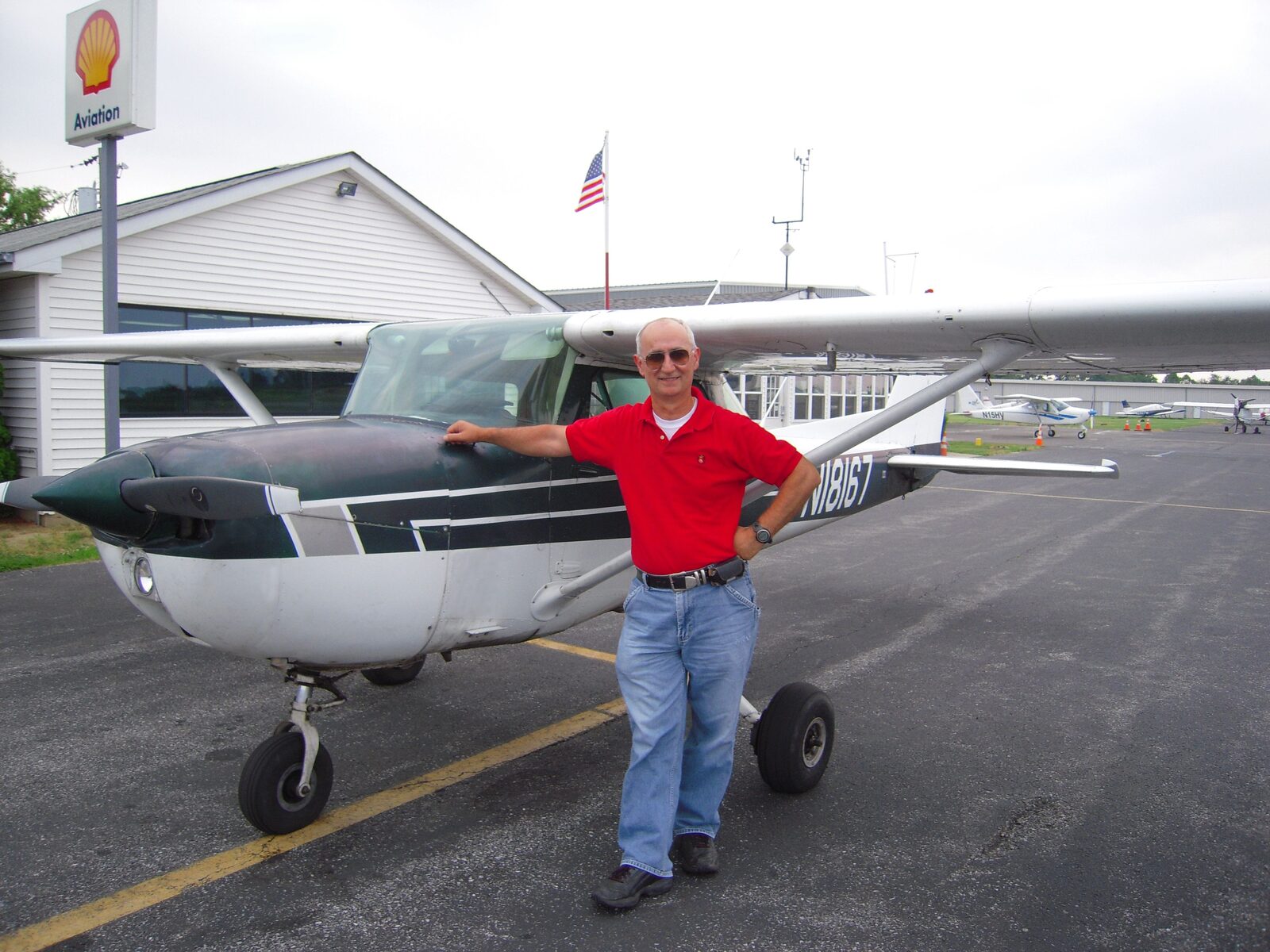
Cessna 150L
Used for private, commercial, and CFI-level training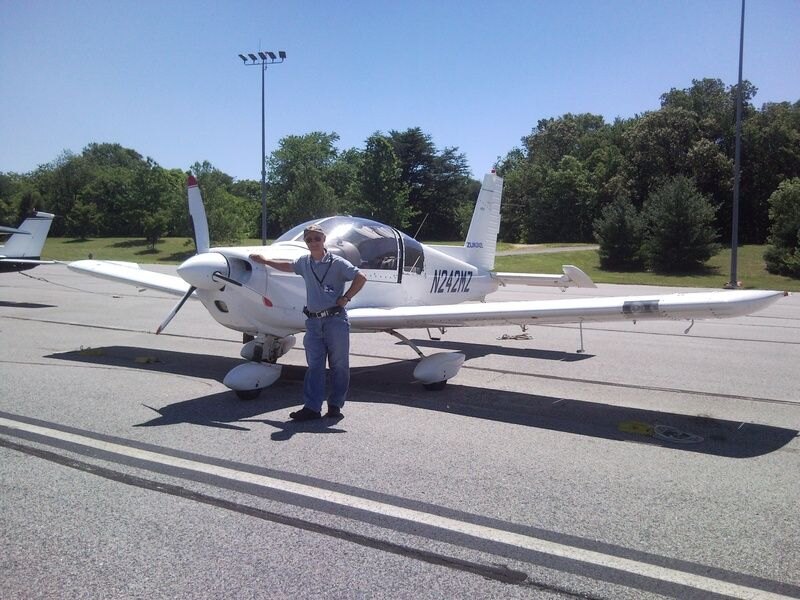
Zlin Z-242L
Used for instrument and CFI-I training · Based at Fort Meade Executive AirportBilled from the scheduled lesson start through completion, as described below
Scheduling note: Reservations use a minimum four-hour window to allow time for briefing, ground instruction, preflight, flight, and debrief. Aircraft time is billed only by Hobbs time. Instructor time begins at the scheduled lesson time when the instructor is present (or upon the instructor’s arrival if later) and continues until the lesson is complete and the instructor and student leave the airport.
A professional airport environment from the beginning.
Baltimore/Washington International
Training at BWI gives you regular experience with air traffic control, complex airport operations, and real-world decision-making. You build habits that carry into every certificate, rating, and future aircraft.
Build clear, comfortable radio communication habits in an active Class B airport environment.
Develop strong habits for taxi clearances, runway awareness, checklists, and professional cockpit organization.
Learn to plan and make decisions around airline, business, and general aviation traffic—not only quiet-airport scenarios.
Experience at a major towered airport helps prepare you to operate comfortably across a wide range of airports.
Broad aviation perspective, applied to your goals.
Experience behind every lesson
Royal Air’s instructors bring decades of combined experience spanning ATP and commercial operations, CFI, CFI-I, and MEI instruction, aerospace flight testing, and day-to-day general aviation. Collectively, that experience includes more than 100 makes and models of aircraft.
That range brings practical judgment, disciplined procedures, and a wider perspective to every lesson—from a student’s first flight through advanced and professional training.
Clear answers for getting started.
Still have a question? Call or email and we’ll talk through the best next step for your training.
There is no honest fixed price because private pilot training is performance-based, not a package of guaranteed hours. Your total cost depends on how many aircraft and instructor hours you need, how consistently you fly, how well you prepare between lessons, weather and aircraft availability, and how quickly you develop the required knowledge, judgment, and flying skills. Regular study and frequent lessons usually reduce time spent reviewing or relearning. After learning about your schedule and experience, we can help you build a realistic training plan—but not promise a final price before seeing how you progress.
Part 61 requires a minimum of 40 flight hours, but that is only an eligibility minimum. Most students require substantially more, commonly about 60–80 hours. Hours alone do not earn the certificate: you must consistently demonstrate the knowledge, risk management, and flight proficiency required for the checkride. Learning to fly is much like learning a sport—the quality, frequency, and consistency of practice matter. For the most efficient progress, plan to fly about two to three times per week and complete 30–60 minutes of focused ground study on most days between lessons, including reviewing notes, preparing for the next lesson, and mentally practicing procedures. Long gaps often require additional time to regain proficiency, while weather, maintenance, scheduling, and each student’s learning pace also affect the calendar timeline.
You can still make progress, but once-weekly training usually takes considerably longer and often costs more because each lesson may include review of skills that faded between flights. Weather, maintenance, illness, or scheduling can also turn one missed lesson into a two-week gap. As a general planning example, a once-weekly student should be prepared for training to take around 18 months and to budget approximately $25,000, plus or minus several thousand dollars at current rates. Some students will finish sooner or spend less, while others will require more. This is a planning estimate—not a quote, package price, or guarantee—and checkride readiness remains entirely performance-based.
Royal Air is a Part 61 training provider and does not arrange loans, affiliate with lenders, or bill lenders or VA education-benefit programs directly. If you independently obtain a loan or another source of funding and the proceeds are disbursed to you, you may use those funds to pay Royal Air separately under our normal payment policy. Students are responsible for confirming eligibility, disbursement rules, covered training, and repayment obligations directly with the lender or benefits administrator before beginning training.
Phase One is the pre-solo phase: you build foundational aircraft-control skills, learn normal and emergency procedures, develop takeoff and landing proficiency, and prepare to operate safely by yourself. Phase Two is the cross-country phase: you develop navigation, weather, flight-planning, decision-making, night, and supervised and solo cross-country experience. Phase Three is practical test preparation: you bring your knowledge, risk management, and flight skills to the standards required by the Private Pilot Airman Certification Standards and prepare for the oral and flight portions of the checkride. Progression is based on demonstrated proficiency, not simply completing a set number of lessons or hours.
Most private pilot training is conducted during daylight. Only a small portion—typically about two to three flights—is intentionally conducted at night, usually later in Phase Two during the cross-country phase. During winter, the shorter days mean most lessons must begin early enough to use the full four-hour training block and have the aircraft safely on the ground before sunset. After-work lessons may therefore be limited or unavailable for much of the winter. Weekends are also the highest-demand periods for instructors and cannot be guaranteed every week. Students with some weekday and daytime flexibility generally progress more consistently and should plan and schedule well in advance.
No. Sessions are reserved in minimum four-hour blocks so there is enough time for the briefing, ground instruction, preflight, flight, and debrief. Aircraft charges apply only to recorded Hobbs time.
The published aircraft rates include fuel. The Cessna 150 is $125 per Hobbs hour and the Zlin Z-242L is $175 per Hobbs hour.
Cash or check is preferred. Royal Air does not accept credit cards or debit cards. If cash or check cannot reasonably be provided, Venmo or Zelle may be accepted as a backup payment method. Please confirm the payment method and instructions with Royal Air before sending an electronic payment.
Royal Air’s primary training location is Baltimore/Washington International Airport (BWI/KBWI). The Zlin is currently based at Fort Meade Executive Airport (FME/KFME), and instruction is also available in client-owned aircraft at suitable airports. All training is scheduled by appointment.
Royal Air does not operate a walk-in office. Please call, email, or submit the student inquiry form before coming to either airport so we can confirm when and where to meet.
Ground and flight instruction is billed at $65 per hour. Instructor time begins at the scheduled lesson time when the instructor is present. If the instructor arrives after the scheduled time, billing begins when the instructor arrives; time is not billed before the instructor is available. Billing continues through the briefing, ground instruction, preflight, flight, debrief, and other postflight instruction, and ends when the lesson is complete and the instructor and student leave the airport.
Training is by appointment. Same-day cancellations or rescheduling requested by the client may be charged one hour of instructor time at the current rate. No charge applies when a cancellation is due to weather, aircraft maintenance or unavailability, instructor unavailability, or a safety or operational decision by Royal Air. Students receive the complete policy before scheduling training.
Help us understand where you are and where you want to go.
Start a conversation
Complete this short background form and Royal Air will follow up to discuss the most appropriate next step. This is an inquiry, not a training reservation or enrollment agreement.
Your next flight starts here
All training is by appointment. Contact us before coming to BWI or FME so we can confirm when and where to meet.